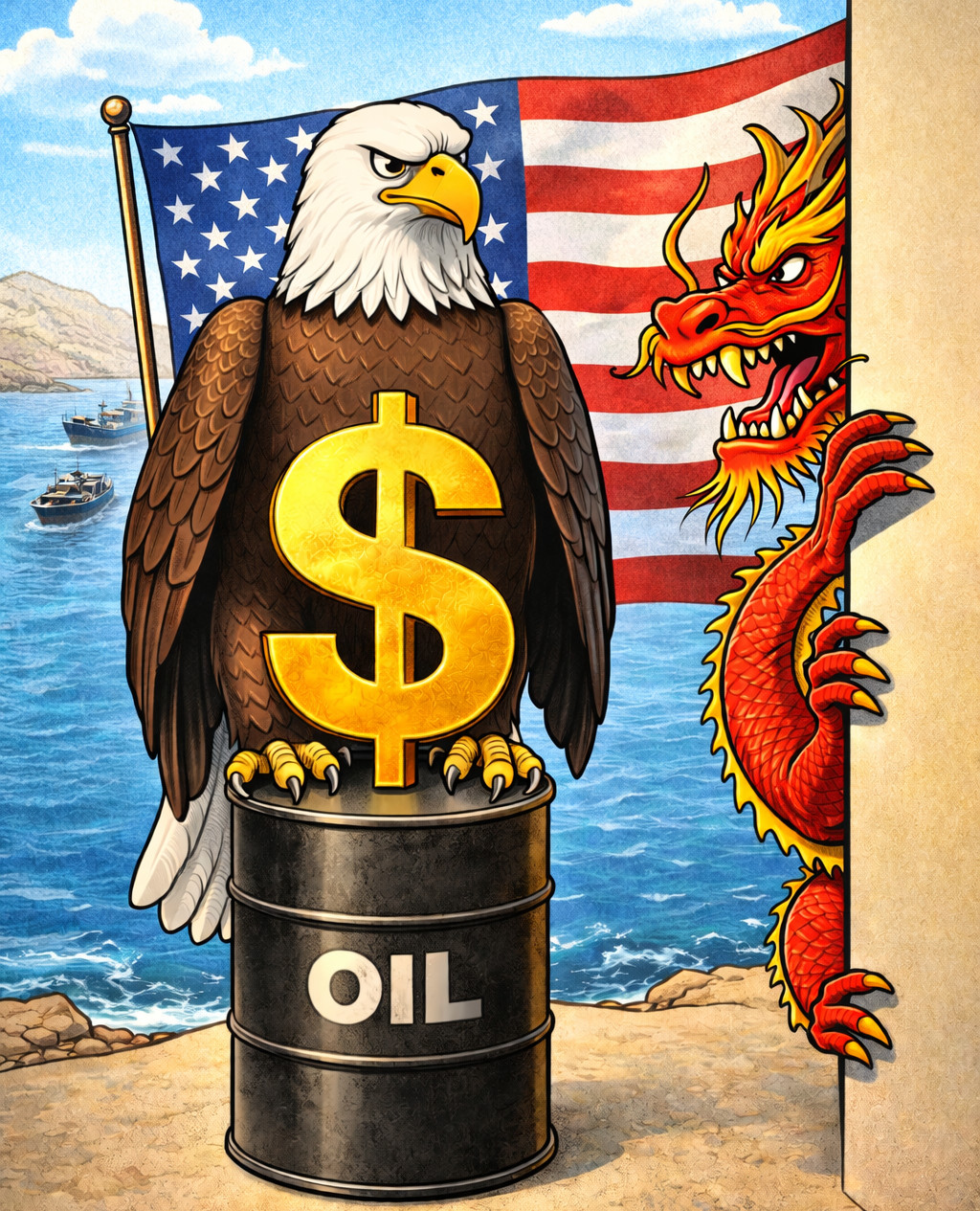
Iran cannot be allowed to develop a nuclear weapon. That’s the justification we’ve been given. But is that the ultimate end goal of Trump’s actions in Iran? We may be watching an all-of-government approach to weaken China and preserve the value and utility of the petrodollar.
The petrodollar refers to the system where oil is priced and traded in U.S. dollars. This forces countries to hold and use dollars to buy energy. That demand for dollars strengthens our currency and drives foreign money into U.S. financial assets like Treasury bonds. As a result, the United States can borrow more cheaply, run persistent trade deficits, and attract global capital, giving it a level of economic flexibility and financial leverage that most other nations do not have.
That last paragraph pretty much says it all. If the United States allows China to supplant the U.S. dollar as the world’s trading currency, it could spell economic doom for our nation. This appears to be a coordinated effort to preserve the existing system built around energy and the U.S. dollar, while also restraining China’s ability to build an alternative.
Start with the threat to the petrodollar before this conflict began. China had spent years methodically building the infrastructure to supplant dollar dominance in oil trade: yuan settlement corridors; the mBridge platform, which allows financial institutions to bypass dollar rails and move digital currencies across borders; and deepening financial and technological ties with Gulf producers. Beijing’s ambition wasn’t a dramatic overnight coup. It was patient structural erosion. Shift enough oil settlement into yuan, recycle enough petrodollar surpluses into Chinese assets, and the architecture of dollar dominance quietly hollows out.
The petrodollar system, born from the 1974 security-for-oil-pricing bargain between the U.S. and Saudi Arabia, rests on three pillars: oil priced in dollars, transactions settled in dollars, and oil revenue recycled into dollar-denominated assets. Because oil is so central to global manufacturing and transport, paying for it in dollars creates a gravitational pull that dollarizes trade, saving and reserves across the global economy. Undermine that dollar-based oil trade, and the whole edifice begins to shift.
Washington has noticed. Gulf states, led by Saudi Arabia, supported the U.S. campaign against Iran and have so far viewed American military performance favorably for the most part. Whatever one thinks of the conduct of the war, one thing is clear: When the security commitment was tested, it held.
The Wall Street Journal (free link)
The Strait of Hormuz is the artery of the oil market for the Eastern Hemisphere. Roughly a fifth of the world’s oil moves through it. Control that, and you influence how oil is bought and sold, which means you influence the currency used to settle those transactions.
There have been credible reports of Iran attempting to tie passage through Hormuz to yuan-denominated transactions with China. That is a direct attempt to chip away at the dollar’s role in global energy markets.
The U.S. has moved to directly constrain Iranian oil exports and reassert control over the flow of energy through the region. The blockade strategy alone is costing Iran hundreds of millions per day while restoring U.S. leverage over the shipping lanes.
The action in Iran is just the latest move by the Trump administration that hits at China’s growing influence. Venezuela, I believe, was the first major body blow. Removing Maduro was a direct hit on China’s growing foothold in South America and its access to oil outside of U.S. influence. U.S. diplomacy has also consolidated power in the Middle East into a U.S.-aligned bloc that includes Gulf states willing to act in their own defense while remaining inside the American security umbrella.
Europe fits into this as a problem. For years, European countries have funded the very actors they claim to oppose, much like the U.S. did through open trade with China for decades, particularly through energy dependence on Russia. U.S. actions in Iran have exposed Europe as a paper tiger, willing to take mostly performative steps to confront totalitarianism and Islamic terrorism. Each step, or misstep, reveals a continued loss of power and prestige for the continent.
Here’s a recap of what has happened over the last year and a quarter of this second Trump administration:
- Secured the Western Hemisphere.
- Consolidated the Middle East under a U.S.-aligned security framework.
- Reduced Europe to a secondary role.
- Nearly controls key energy chokepoints.
The world feels upended because it is. Trump, like a bull in a china shop, is thrashing and shattering old arrangements left and right. He has China backed onto its heels for now in this massive realignment. China, however, does not play the short game. The U.S. is constrained in this way because we change our president at least every eight years.
China has been working at this for decades. Its strategy is not to replace the dollar overnight. It is to settle more trade in yuan, build payment systems outside of U.S. control, and route around the existing system. If successful, that would significantly reduce U.S. power and influence across the world.
The United States’ actions over the last year and a quarter have disrupted decades of Chinese work. Disruptions in the Middle East have forced China to scramble for alternative supplies, with imports from the region dropping sharply as the conflict intensifies.
I’m not saying this is right or wrong. These are observations from reading the same news reports everyone else sees. I don’t know if my take is any better than a talking head on TV, but it certainly can’t be much worse.
China is the only actor with the ability to challenge the U.S. and the petrodollar system. Every move that limits China’s access to energy, its ability to settle trade outside the dollar, or its expansion into resource-rich regions slows that challenge.
Will this stop with Iran? Iran seems to be just one front in a broader effort to cement U.S. petrodollar power before China can get its leg in the door. They’re up to the ball of their foot right now, and Trump is repeatedly slamming the door on it, trying to keep them out.